


A lot of the CEOs I talk to are trying to get AI under control.
They've hired someone to lead it. They've asked for an AI strategy. They've put it in a box with a name and an owner, so it feels like one more thing they're managing well.
I understand the instinct. But I think it's the wrong move, and a conversation this week made me sure of it.
Here's the problem with the box:
It treats AI as a tool you adopt, like a new CRM or a new reporting system. Something that sits alongside the business. And as long as you see it that way, you'll keep making decisions that make sense for a tool and no sense for what's actually coming.
Because AI isn't going to sit alongside your business. It's going to run through every person in it.
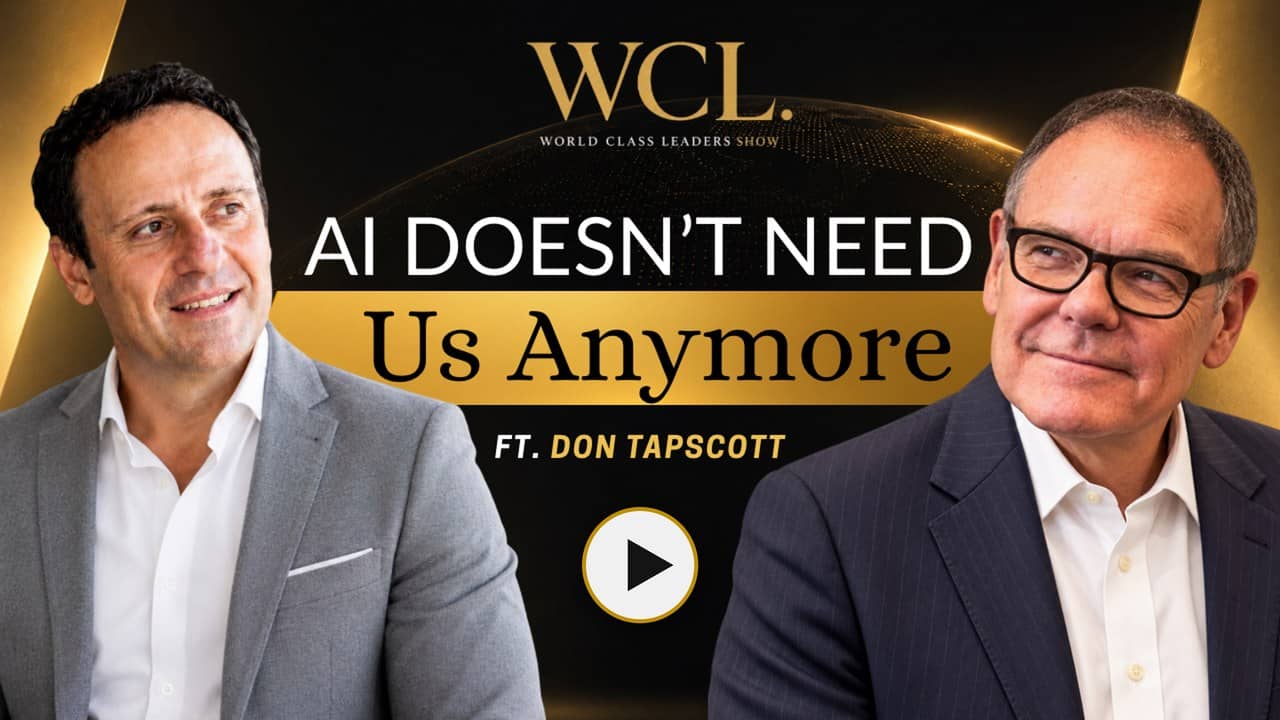
I got the sharpest version of this from Don Tapscott on the podcast this week.
Don has spent forty years calling the big technology shifts, the digital economy, the web, blockchain, usually years before anyone else. So when he says leaders don't yet grasp what AI is, it's worth sitting with.
His point is that we're moving past AI as a tool, and past AI as an agent that handles a task, into something he calls identic AI. An extension of each person.
Picture a version of yourself with an IQ of 1000. Your own doctor who's been to every medical school. Your own analyst, negotiator, and lawyer, available at once. Now hand one to every employee in your company. And to every one of their direct reports.
That's when he asked the question I haven't been able to put down.
What does it mean to run a company when every person on your team has an infinite number of vice presidents?
Sit with that for a second, because it breaks much of how a company is built.
None of those are answered by an AI strategy sitting in a box on the side of your business.
Don's advice was blunt, and it stuck with me:
Stop writing an AI strategy. You don't need one. You need a strategy where AI runs through everything, how you sell, how you build, how you hire, how you decide. The moment you separate "the AI plan" from "the plan," you've already misunderstood the thing.
And here's the part that matters for how you spend your own time.
When agents execute the work, execution stops being the advantage. For decades the winning idea was that execution beats strategy, that a plan left on the train doesn't matter because delivery is everything.
Flip that. When delivery is handled by agents, what's left is the part only a human can do. Judgement. Moral leadership. Deciding what the company is actually for and what it will never do.
That is the real work of the CEO in this shift, and it's the opposite of putting AI in a box and moving on.
So here's the question worth carrying into your next leadership meeting:
Are you managing AI as one more thing on the side, or are you rebuilding the business around it?
Because your competitors are about to split into those two groups, and only one of them is still relevant in five years.
Andrea
🎧 Full conversation with Don Tapscott on The World Class Leaders Show:
 |
One idea a week on how top CEOs lead when the stakes are high, from inside rooms most people never enter. Free, and you can leave any time.