
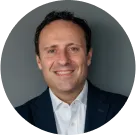
Most leaders say they value growth. But few are willing to pursue the discomfort that real growth demands. That’s why I was struck by my conversation with Ole Rosgaard, CEO of Greif, a global industrial packaging company operating in 40+ countries. Ole didn’t just talk about growth — he’s lived it, in the most demanding environments. His story isn’t the usual tale of linear success. It’s the kind of story that makes you stop and ask: “Am I actually growing? Or am I just getting better at staying comfortable?” Here are three insights that made me reflect deeply — and I believe they will challenge you too. 1. Discomfort Isn’t a Side Effect — It’s the StrategyOle’s leadership philosophy is built around a simple truth: “If you're not uncomfortable, you're not growing.” We’ve all heard this before, but Ole doesn’t mean it metaphorically. He once left a comfortable, high-paying role in Europe — complete with private school for his children — to move his family 5,000 miles away to join a distressed company at-will in Ohio. Why? Because he recognized the feeling of discomfort as a signal — not of danger, but of opportunity. That’s the mindset shift: Most leaders wait until things are safe before they act. World-class leaders act when things are unclear — because they’ve trained themselves to move before certainty arrives. 🔁 Ask yourself: Where in your leadership are you waiting for “just a little more clarity” before taking action? 2. The Best Leaders Don’t Just Tolerate Risk — They Teach Others to Handle ItOne of Ole’s biggest legacies at Greif has been building a culture where risk isn’t feared — it’s expected, supported, and shared. When 15,000 colleagues know that failure is not fatal but a signal of progress, you create something rare: Most companies claim to empower people — but they do it with invisible guardrails. Here’s how:
It’s one of the most practical, self-correcting systems of ownership I’ve seen. 💡 Reflect on this: Do your people feel empowered only when things go right — or also when things go wrong? 3. Time is the Scarcity. Not Talent. Not Capital.Before becoming CEO, Ole was COO — deep in operations. But stepping into the top job, he was hit with a surprise: “You go from one boss to ten. You spend more time with investors, banks, the board, and less in the business.” He realized that the greatest challenge of being a CEO is managing time as your scarcest resource. What shifted everything for him?
⏳ Challenge: What are you still giving time to out of habit, not impact? Final Thought:Ole didn’t lead Greif to global recognition — including becoming a Harvard Business School case — by playing it safe. He did it by asking his people to do what he demands of himself: “Get uncomfortable. Learn fast. And make the risk worth it.” If more leaders did the same, we’d see fewer stagnant organizations — and more world-class ones. 👉 Watch the full episode here Get the next issue on ThursdayOne idea a week on how top CEOs lead when the stakes are high, from inside rooms most people never enter. Free, and you can leave any time. Latest issuesYour company will only change as much as you do 26806160-38596 Your company will only change as much as you do 26806160-82af7 Your company will only change as much as you do 26806160-310e6 |